Six Ways to Make Your Business Email Harder to Hack
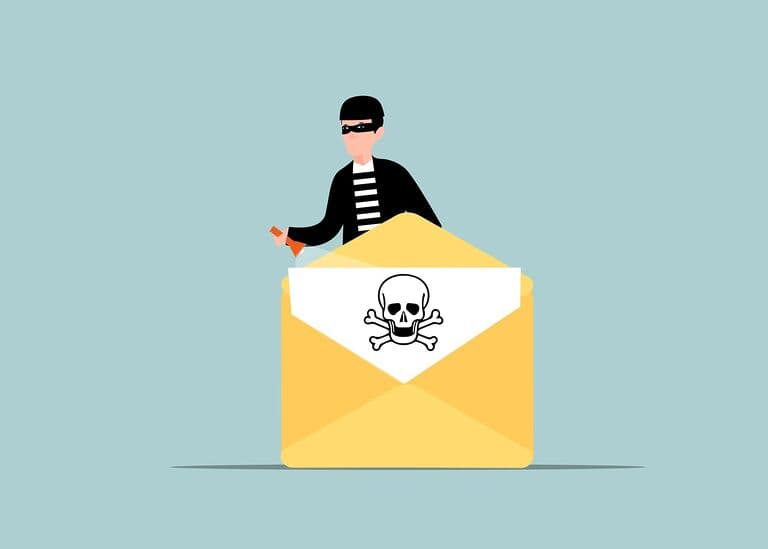
Business email is the most targeted attack surface in most professional services practices. Supplier impersonation, fake invoice attachments, spoofed sender addresses - the volume of email-based attacks has grown every year, and the techniques have become harder to spot. Six configuration changes make your email significantly harder to compromise, and none of them require your staff to change how they work.
The reason email is such a useful target is that people trust it. Your team receives dozens of messages a day and cannot scrutinise every one. Attackers know this. They craft emails that look legitimate, mimic real senders, and exploit the natural pace of a busy workday. Once someone clicks the wrong link or opens the wrong attachment, the damage is done quietly, sometimes weeks before anyone notices.
The good news is that most email-based attacks succeed because of gaps that are straightforward to close. Strong, unique passwords on every account matter more than most people realise - if the same password is used across multiple accounts and one gets compromised, all of them are at risk. A password manager handles this problem without adding friction to your team's day. Beyond passwords, enabling multi-factor authentication - where logging in requires a second confirmation step, like a code sent to a phone - stops most credential-based attacks cold, even if a password has already been stolen.
Keeping email software updated sounds obvious, but it is easy to defer. Updates often include fixes for security vulnerabilities that attackers are actively exploiting. Leaving those updates pending is leaving a known door unlocked. For businesses sending sensitive client information by email, encryption ensures that even if a message is intercepted, the content cannot be read. Most modern email platforms support this, though it does need to be configured correctly to work as intended.
When email security is set up properly, your team can work without second-guessing every message. Suspicious emails get caught before they reach inboxes. Unusual login attempts trigger alerts so someone can respond before the situation escalates. Staff have clear guidance on what to do when something looks off, and there is a process to follow rather than a guess. For healthcare practices and legal firms handling sensitive client information, this kind of baseline is not optional - the NZ Privacy Act 2020 requires that reasonable steps are taken to protect personal information, and email is one of the most common places that protection fails. Security awareness training is the cyber defence that helps your team recognise these threats before they cause damage.
Getting this right is not something to work through alone. The configuration options, the right tools for your team's size, and the ongoing monitoring all take time that a busy practice manager does not have. A managed IT provider can assess your email security, close the gaps, and keep an eye on things so you do not have to. If a breach does occur, CERT NZ at cert.govt.nz is the right place to report it, and your provider should be helping you respond quickly.
ITstuffed works with professional services businesses across Canterbury on exactly this. If you want to know where your email security stands, a 15-minute IT Fit Check at /booking is a straightforward place to start.